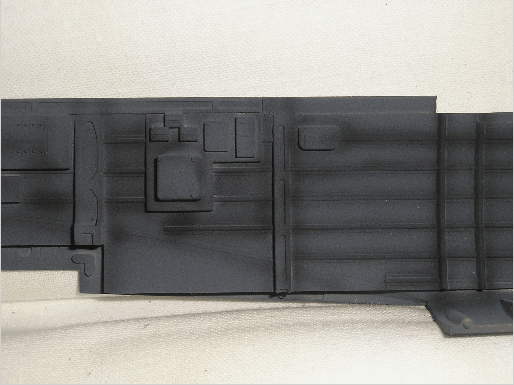
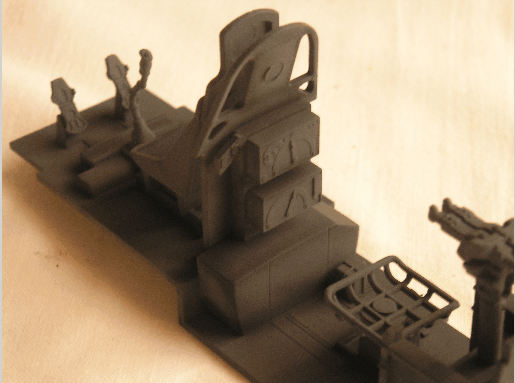
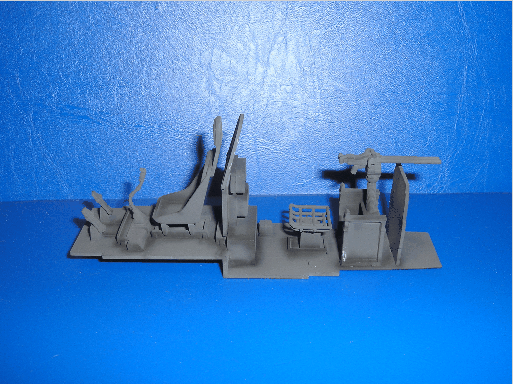
Once you
have painted the base colour (XF-24), you can start shading. Using
XF-1 paint (Tamiya matte black) diluted with a lot of alcohol, we
can go on and airbrush all of the odd corners, in such a way that
now you can see two tones: the base (lighter) and a difused shadow
(darker). It doesn't matter if the shadows are wider or more narrow
or that they take up more or less space: as we still haven't finished.
On some
occasions we can mix XF-10 (Tamiya matte brown) with XF-1 (matte black)
instead of just matte black. I like to do this when the cockpit's
base colour is lighter (for example the current fighter planes).
Now we
can go on and do the same for the seats and inside controls.
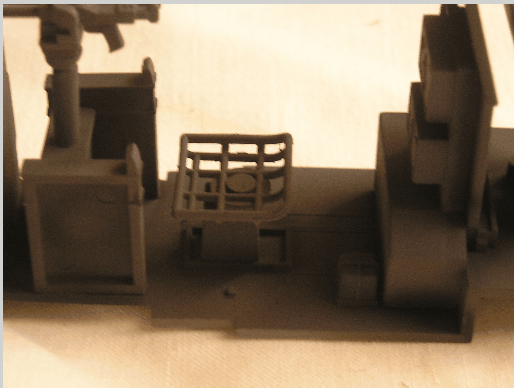
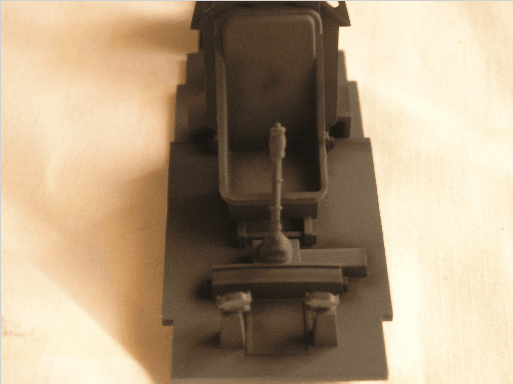
Now you
can see the light and dark areas, we are starting to create volume.
In all of the courses you will see that we always talk about volume:
a model aeroplane can not be flat, as it doesn't show any life. The
technique is always the same:
- Base
Colour
- Shading
(made using a darker colour)
- Lights
(made using a lighter colour)