The infinitive as part of the sentence
An infinitive can carry out different uses in a sentence. Amongst them there is Satzglied (autonomous part of the sentence)
a) The infinitive instead of the subject
| Es freut mich Dich zu sehen. |
| I'm pleased to see you |
| Uns ärgert es, ständig auf euch warten zu müssen. |
| It bothers us that we always have to wait for you. |
b) The infinitive instead of the object of the accusative
| Ich bewundere es, hart zu arbeiten. |
| I admire hard work. |
| Er hasst es zu warten. |
| He hates waiting |
c) The infinitive instead of the object of the genitive
| Er schämt sich, kleiner als die anderen zu sein. |
| He's embarrased about being shorter than the others. |
| Die Studentin rühmt sich, die besten Noten zu haben. |
| The student boasts about having the best marks. |
d) The infinitive instead of the prepositional object
| Der Gärtner beschloss, einen Rosenstock zu pflanzen. |
| The gardener decided to plant a rosebush. |
| Der Lehrer beschloss, seine Schüler zu bestrafen. |
| The teacher decided to punish the students |
e) The infinitive instead of the attributive
| Ich beherrsche die Kunst, Klavier zu spielen. |
| I dominate the art of playing the piano. |
| Ich habe die Kraft weiter zu machen. |
| I have the strength to continue. |
---------------- oooo O oooo ----------------
Exercises
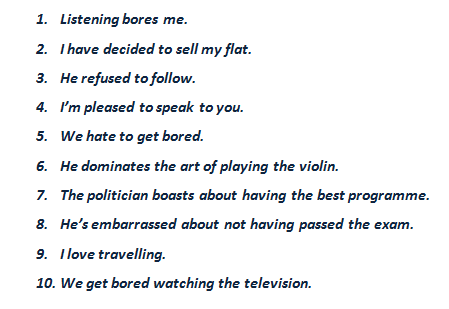
Translate the following sentences.
(Click on the box to see the answers; double clivk to return to the original position)